
2026 Africa Cost of Living
2026-10-05
Xpatulator’s Africa cost of living rankings as at 1 October 2026 place Monrovia 1st, followed by Libreville, Abidjan, Lagos and Abuja. Nigeria retains four cities in the top eight, while Lilongwe rises 4 places to 9th, Luanda rises 10 places to 14th and Lusaka rises 5 places to 17th. Exchange rate movements have reduced dollar converted costs in several West and Central African locations, while high inflation, fuel prices, import dependence and conflict continue to place pressure on expatriate expenditure elsewhere. The results reinforce the need for expatriates and global mobility teams to compare salary purchasing power rather than nominal salary when evaluating an international assignment.
Xpatulator’s Africa cost of living rankings as at 1 October 2026 show Monrovia as the most expensive African city for expatriates, with a weighted Cost of Living Index of 94.8. Libreville ranks 2nd at 87.6, followed by Abidjan at 82.0, Lagos at 82.0 and Abuja at 81.5. Kano rises 1 place to 6th at 79.6, Kinshasa declines 1 place to 7th at 79.2 and Ibadan remains 8th at 77.6. Lilongwe rises 4 places to 9th at 75.5 and Accra declines 1 place to 10th at 73.5. New York City is the benchmark and is set at 100.
The ranking measures the cost of maintaining an international professional spending pattern rather than average local household expenditure. Xpatulator compares 13 basket groups weighted according to expatriate spending norms. Household accommodation carries the largest weighting at 30 per cent, followed by transport at 18 per cent and groceries at 16.5 per cent. Local prices, wages, supply, demand and exchange rates therefore all influence the result.
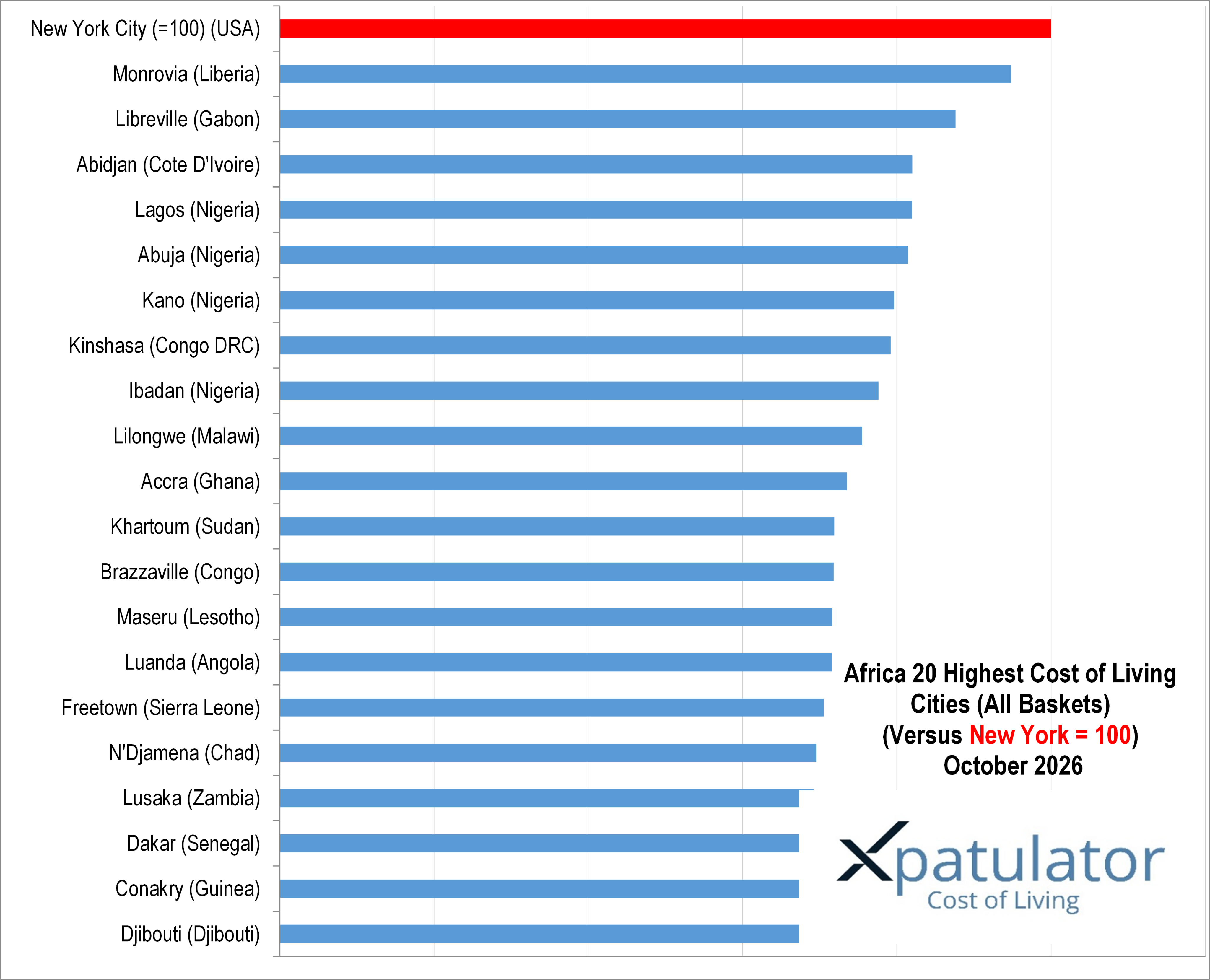
Monrovia remains 1st with the same 94.8 index as in July. Transport, international education and imported groceries are important pressures. Limited availability of reliable private transport and international standard services helps explain why an expatriate basket can be expensive despite lower local incomes. Liberia’s inflation was about 5.0 per cent in June and the Liberian dollar remained broadly stable around 180 to the United States dollar during 2026.
Libreville remains 2nd, although its index falls from 88.6 to 87.6, with communication, groceries, accommodation and clothing relatively expensive. Abidjan remains 3rd but falls from 83.9 to 82.0, with communication, education, transport and groceries important. Brazzaville declines 2 places to 12th, N'Djamena declines 2 places to 16th and Dakar declines 2 places to 18th. The currencies used by these West and Central African locations are fixed to the euro. The euro fell from 1.1741 United States dollars on 30 September 2025 to 1.1355 a year later, implying a weakening of about 3 per cent against the United States dollar. This tends to reduce their measured cost for expatriates paid in dollars, although changes in local basket prices can offset the currency effect.
Nigeria accounts for four of the top eight locations. Lagos and Abuja remain 4th and 5th, Kano rises to 6th and Ibadan remains 8th. Housing, private power, healthcare, transport and services remain important. The naira was around 1,329 to the United States dollar in late September 2026, compared with about 1,485 a year earlier, making the currency stronger in dollar terms. Nigeria’s headline inflation eased to 15.39 per cent in August, but fuel prices rose sharply again in September. Higher petrol and diesel costs feed into commuting, generator use, logistics and goods prices.
Lilongwe rises 4 places to 9th as its index increases from 70.5 to 75.5. Communication, personal care and transport are particularly high. Malawi’s annual inflation remained elevated at 20.0 per cent in August, while non food inflation was 31.8 per cent. Accra declines 1 place to 10th at 73.5 as Ghana’s annual inflation rose to 5.2 per cent in September. Kinshasa ranks 7th, with communication, personal care, education and transport contributing strongly to the expatriate basket.
Khartoum remains 11th at 71.9, but its ranking needs careful interpretation. Sudan’s continuing conflict has damaged infrastructure and fragmented markets, while the Sudanese pound lost almost half its value between May and September in army controlled areas. Secure accommodation, private transport, reliable utilities and healthcare access can therefore matter more to an international assignee than ordinary consumer prices.
Maseru declines 1 place to 13th at 71.6, with accommodation its most notable pressure. Luanda rises 10 places to 14th at 71.5 as clothing, communication, personal care and household goods increase. This occurs even as Angola’s national inflation falls to 8.78 per cent in August, showing how the expatriate basket can move differently from headline inflation. Freetown remains 15th at 70.5, while Conakry declines 2 places to 19th and Djibouti declines 2 places to 20th. Import dependence, communication, transport and limited international standard services remain important across these markets.
Lusaka rises 5 places to 17th at 69.2. Zambia’s inflation eased to 6.1 per cent in September, but fuel prices rose by 24 per cent and the kwacha faced renewed pressure from demand for United States dollars. Higher energy and freight costs remain a wider regional risk. Xpatulator’s international inflation analysis dated 5 October 2026 notes that oil above 100 United States dollars per barrel and disrupted supply chains can feed into transport, food, utilities and imported goods, particularly in import dependent economies.
For expatriates and global mobility specialists, the central issue is salary purchasing power. A higher nominal salary can still buy less if accommodation, transport, schooling, healthcare and groceries absorb a larger share of income in the host location. Comparing home and host costs before accepting an offer helps determine whether salary, housing support, a cost of living allowance or other assignment provisions are sufficient. Xpatulator’s Salary Purchasing Power Parity Calculator calculates an equivalent host salary adjusted for cost of living differences so offers can be assessed on purchasing power rather than headline salary.
Founded in 2007, Xpatulator uses more than 50 types of data sources, supported by analyst quality assurance, to organise international cost of living, exchange rate and hardship information. Use Xpatulator’s Cost of Living Calculators and Tools to compare African locations, assess the effect on purchasing power, and establish the salary, allowances and international assignment package required to maintain a comparable standard of living.